How to Understand the Amazonian Mushroom and Its Scientific Background
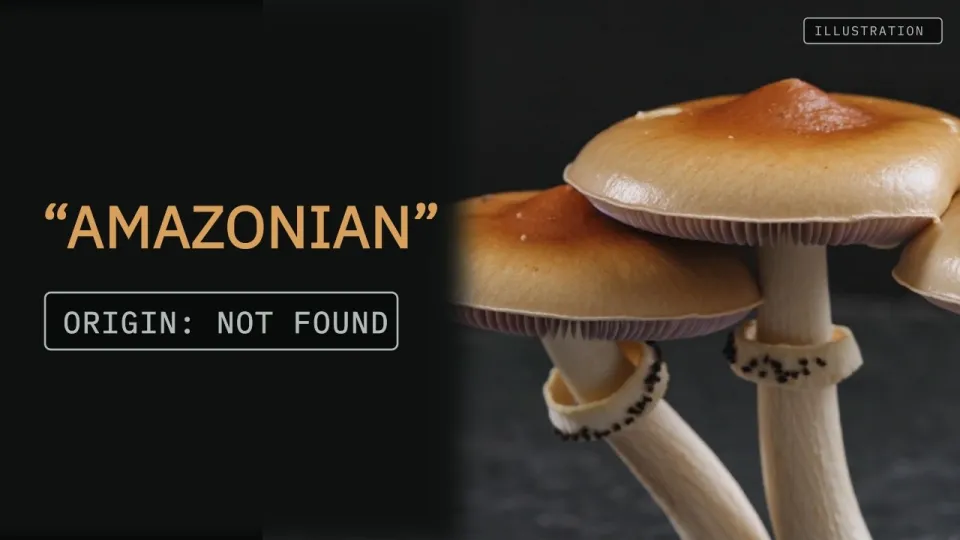
· based on the channel Shroomverse
What Is the Amazonian Mushroom
The Amazonian mushroom refers generally to certain psilocybin-containing mushrooms native to the Amazon rainforest. These mushrooms have been studied for their psychoactive properties and botanical classification. The term "Amazonian mushroom" is not limited to one single species but often encompasses several related species of the genus Psilocybe, primarily Psilocybe cubensis and closely related taxa. Understanding this mushroom requires tracing back through historical scientific literature and specimen collections to see how the name was applied and evolved.
Tracing the Scientific Paper Trail
The name "Amazonian mushroom" originates from early descriptions and taxonomic papers that recorded mushroom specimens collected in Amazonian regions. Initial classification efforts were complicated by limited specimen availability and morphological similarities between species. Researchers like Guzmán and others contributed to the taxonomy by publishing detailed studies on Psilocybe species from the Amazon basin. These papers helped establish which mushrooms were grouped under the Amazonian label and clarified species distinctions 02:15.
Taxonomy Challenges and Species Differentiation
A major challenge with the Amazonian mushroom is the overlapping features among Psilocybe species. For example, Psilocybe cubensis, known worldwide, has Amazonian variants that differ slightly in cap color, spore size, and habitat. Additionally, species such as Psilocybe amazonicus and Psilocybe caerulescens were once considered synonyms or variants but later research identified them as distinct species based on microscopic and molecular data 05:40. This ongoing research helps refine the definition of the Amazonian mushroom and its correct scientific names.
Ecological and Cultural Significance
Amazonian mushrooms grow in tropical humid environments, often in cow dung or decaying plant matter. Their psychoactive properties have been used in indigenous rituals and traditional medicine for centuries. Scientific interest surged when these mushrooms were linked to psilocybin, a compound studied for potential therapeutic applications. Understanding the specific species involved is crucial for both ethnomycology and pharmacology 08:10.
How Modern Research Clarifies the Amazonian Mushroom Identity
Modern molecular techniques, such as DNA sequencing, have been employed to analyze Amazonian mushroom specimens. These methods confirm species distinctions that were ambiguous in earlier morphological studies. They also help chart the evolutionary relationships within the Psilocybe genus. The paper trail of research, from initial field collections to recent genetic studies, shows an evolving understanding of what the Amazonian mushroom truly represents in mycology 10:55.
Summary
The Amazonian mushroom is a collective term for several psychoactive mushrooms native to the Amazon rainforest. Its name and identity are clarified through a history of scientific papers and taxonomic revisions. Ongoing research, including molecular analysis, continues to refine our understanding of these species’ distinctions and ecological roles. The Shroomverse channel provides a detailed exploration of this topic, shedding light on the complex paper trail behind the Amazonian mushroom name.
Key takeaways
- Amazonian mushroom is a term linked to several Psilocybe species found in the Amazon region.
- The name's origin is tied to early mycological papers and specimen collections.
- Scientific classification has been complex due to overlapping species and naming conventions.
- Research reveals distinct species once grouped under the Amazonian mushroom label.
- Understanding the paper trail helps clarify confusion about the mushroom's identity.
Source: Amazonian Mushroom: Following the Paper Trail Behind the Name · Markdown version
Questions & answers
What species are commonly referred to as the Amazonian mushroom?
The Amazonian mushroom typically refers to Psilocybe cubensis and related species like Psilocybe amazonicus and Psilocybe caerulescens found in the Amazon region.
Why is the taxonomy of the Amazonian mushroom complicated?
Taxonomy is complicated due to morphological similarities between species, historical classification overlaps, and evolving scientific methods distinguishing them through molecular data.
What environments do Amazonian mushrooms grow in?
They grow in tropical humid environments, often on cow dung or decaying plant material in the Amazon rainforest.
How has modern research impacted understanding of Amazonian mushrooms?
Modern DNA sequencing has clarified species distinctions and evolutionary relationships, refining the taxonomy and scientific understanding of Amazonian mushrooms.